
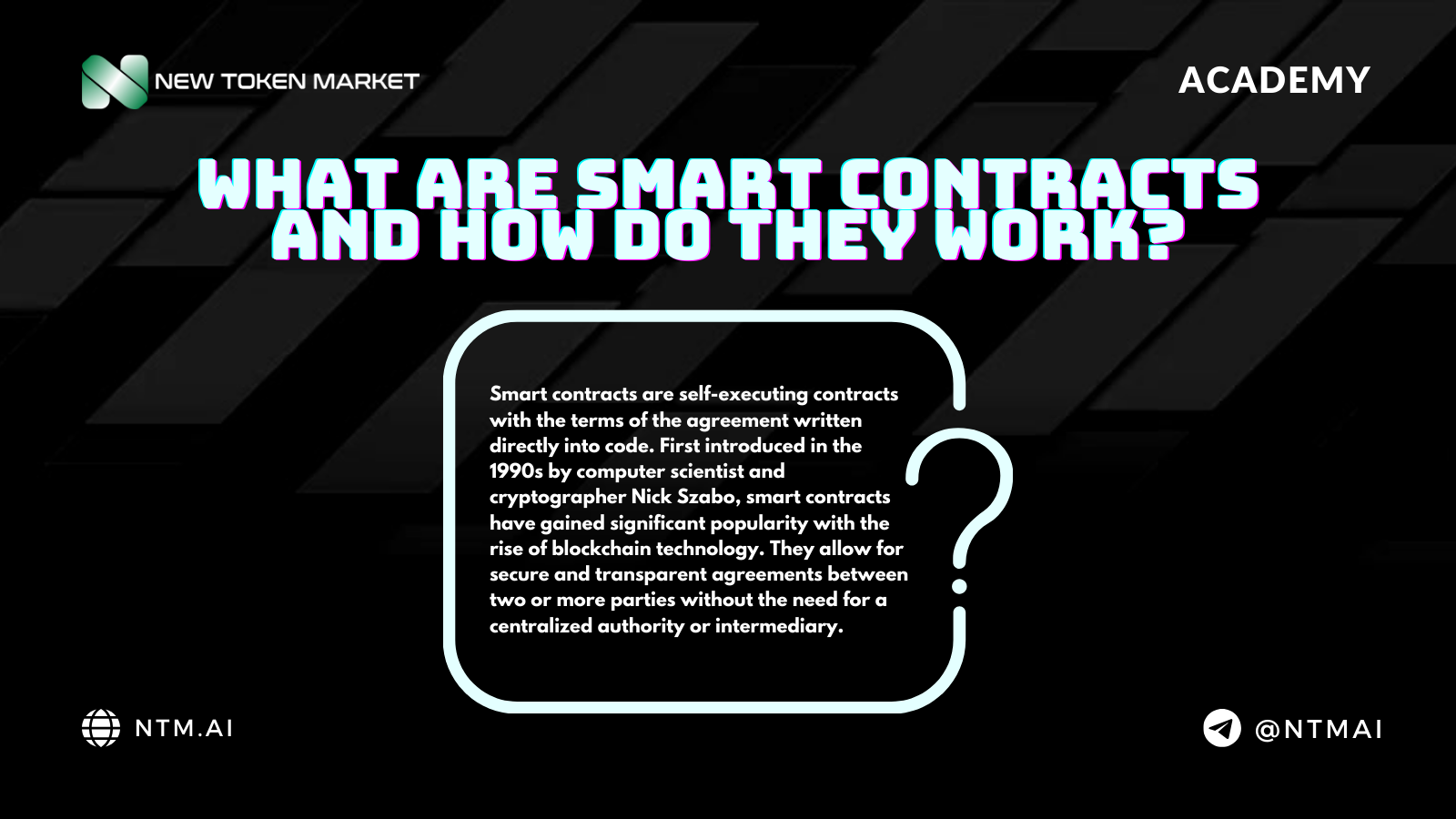
What Are Smart Contracts and How Do They Work?
Smart contracts are self-executing contracts with the terms of the agreement written directly into code. First introduced in the 1990s by computer scientist and cryptographer Nick Szabo, smart contracts have gained significant popularity with the rise of blockchain technology. They allow for secure and transparent agreements between two or more parties without the need for a centralized authority or intermediary.
How Smart Contracts Work
Smart contracts typically operate on blockchain technology, where the terms of an agreement are digitally programmed and transactions are executed securely through computer code. The working process of smart contracts can be broken down into the following steps:
-
Coding the Contract: The terms and conditions of the agreement are written into code. For example, a contract might state that payment will be made upon product delivery.
-
Deployment on Blockchain: The smart contract is then deployed on a blockchain. Because of the decentralized nature of blockchain, the contract becomes visible to everyone and cannot be altered.
-
Automatic Execution: Once the predefined conditions are met, the contract executes automatically. For instance, when the product is delivered, the payment is processed automatically. If the conditions are not fulfilled, the transaction does not take place.
-
Immutability: Once a smart contract is deployed and running, it cannot be reversed or altered, ensuring that all parties are bound to the terms of the contract.
Advantages of Smart Contracts
-
Security: Since smart contracts run on blockchain, they don’t rely on a central server, minimizing security risks and manipulation.
-
Transparency: All transactions and the terms of the contract are visible on the blockchain, which ensures transparency and fosters trust between parties.
-
Automation: Smart contracts automatically execute when conditions are met, eliminating the need for human intervention, saving time, and reducing costs.
-
No Need for Intermediaries: Traditional contracts often require third-party involvement, such as lawyers, banks, or notaries. Smart contracts remove the need for these intermediaries, lowering costs and speeding up the process.
-
Traceability: Since every step of the contract is recorded on the blockchain, it can be tracked and verified at any time.
Disadvantages of Smart Contracts
-
Code Errors: Smart contracts are written in code, and a poorly written contract can lead to unintended results. A mistake in the code can cause disputes or even financial losses.
-
Immutability: Once a contract is placed on the blockchain, it cannot be modified or reversed. This can be problematic if the contract was coded incorrectly or if unforeseen changes arise.
-
Legal Uncertainty: The legal status of smart contracts is still unclear in many jurisdictions, and they may conflict with traditional legal frameworks in some cases.
-
Technical Complexity: Implementing and coding smart contracts requires technical expertise, which can be a barrier for ordinary users.
Use Cases for Smart Contracts
-
Finance: Smart contracts enable secure and automatic financial transactions such as lending, borrowing, and insurance processing. They are widely used in decentralized finance (DeFi) projects.
-
Supply Chain Management: Every stage of the supply chain can be tracked using smart contracts, ensuring transparency from production to the end consumer.
-
Real Estate: Property transactions, including buying, selling, and renting, can be streamlined with smart contracts. Transfers of payment and property deeds can be automated without intermediaries.
-
Insurance: In the insurance industry, smart contracts can automatically trigger payouts when a specific event occurs, reducing costs and speeding up the claims process.
-
Voting Systems: Decentralized voting systems can use smart contracts to ensure a secure and transparent process, where results cannot be manipulated, creating a fairer voting system.
Conclusion
Smart contracts represent one of the most innovative solutions enabled by blockchain technology. Their security, transparency, and cost efficiency have the potential to revolutionize many industries. However, challenges such as coding errors, legal uncertainties, and technical complexities must be addressed. With technological advancements and regulatory developments, smart contracts are expected to expand their use cases and become an integral part of everyday life.